
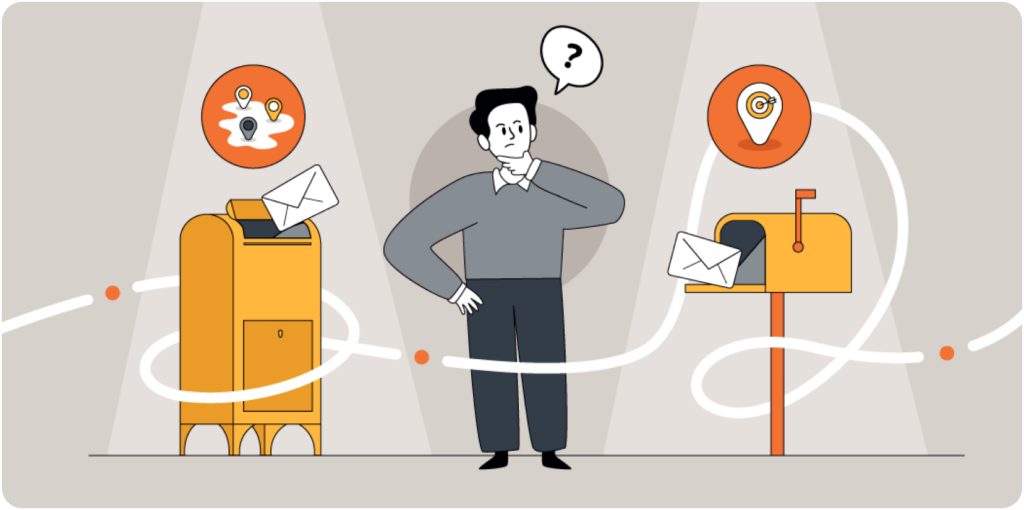

Two businesses each spend $2,000 this month on print marketing. One gets 40 phone calls out of it. The other gets 400. The gap isn’t luck, and it isn’t creative or printing quality either. It comes down to whether they understood the difference between letterbox marketing and direct mail before they spent a cent.
The distinction might sound like semantics, blanket a neighbourhood with flyers, or send personalised mail to named recipients, but the strategic, financial, and logistical differences between these two channels are real. Getting this choice wrong means burning through a marketing budget with little to show for it. Getting it right puts your brand in front of exactly the people who need to see it, at a cost that actually makes sense. Here’s how each channel works across Australia, where they overlap, and how to pick the one that fits your campaign objectives.
Defining Letterbox Advertising and Direct Mail in the Australian Market
Both letterbox advertising and direct mail involve putting physical marketing materials into someone’s mailbox. That’s where the similarities largely end. The two channels differ in how materials are produced, how they’re distributed, who receives them, and what kind of response rates you can realistically expect.
Letterbox advertising, sometimes called unaddressed mail or letterbox drops, refers to the mass distribution of printed materials, flyers, brochures, menus, catalogues, to every household or business within a defined area. There’s no name on the piece. It goes to every eligible letterbox in a street, suburb, or postcode.
Direct mail marketing, by contrast, involves sending addressed, personalised mail to specific individuals. The recipient’s name and address are printed on the piece, and the content is often tailored based on purchase history, demographics, or other customer data. In Australia, direct mail is typically handled through Australia Post’s postal network, while letterbox distribution relies on third-party distribution companies or Australia Post’s unaddressed mail service.
Understanding the core mechanics of each channel is essential before you can make a sensible comparison between letterbox and direct mail strategies.
The Mechanics of Letterbox Distribution Australia Wide
Letterbox distribution across Australia operates through a network of walkers, cyclists, and delivery teams who physically place materials into residential and commercial letterboxes. Major distribution companies maintain teams in metropolitan areas like Sydney, Melbourne, Brisbane, Perth, and Adelaide, while also servicing regional centres through local partnerships.
The process is straightforward. A business designs and prints its marketing material, selects target suburbs or postcodes, and contracts a distribution company to deliver the pieces. Delivery typically happens within a one to two week window, depending on the size of the campaign and the geographic spread.
One thing that catches businesses off guard is the “No Junk Mail” factor. Homes with these stickers are meant to be excluded from delivery, and Australia Post itself notes it delivers only a modest share of unaddressed mail nationally as a result. The share of households opting out varies a good deal by suburb, so your effective reach will always be somewhat lower than the total household count for a given area. Reputable distribution companies honour these stickers as a matter of course.
Quality control varies between providers. The best distributors use GPS tracking on their delivery teams and provide completion reports. Others rely on spot checks. If you’re spending thousands on a letterbox campaign, it’s worth asking how your distributor verifies that materials actually reached letterboxes rather than ending up in a skip bin.
How Direct Mail Marketing in Australia Differs in Delivery
Direct mail in Australia runs through the postal system. Each piece carries a specific name and address, which means it’s sorted, transported, and delivered by Australia Post alongside regular mail. This gives direct mail a different kind of credibility. It arrives in the same bundle as bills, bank statements, and personal correspondence.
The production process is more involved. You need a clean, up-to-date mailing list, which might come from your own customer database, a purchased list from a data provider, or a combination of both. Each piece needs to be addressed, which adds a variable data printing step. Fulfilment houses handle the printing, addressing, sorting, and lodgement with Australia Post.
Delivery timelines for direct mail are generally reliable but not instant, typically taking several business days depending on the destination and service level chosen. Unlike letterbox drops, direct mail isn’t affected by “No Junk Mail” stickers because it’s addressed to a named individual and treated as legitimate correspondence.
The trade-off is clear: direct mail is slower to set up, more expensive per unit, and requires data infrastructure. But it reaches named individuals with a level of professionalism that unaddressed material simply can’t match.
Unaddressed vs Addressed: The Core Strategic Difference
The fundamental distinction in any comparison of letterbox vs direct mail comes down to one word: addressing. Unaddressed mail is a broadcast tool. Addressed mail is a precision tool. Neither is inherently better, they serve different purposes at different stages of the customer journey.
Unaddressed letterbox material works best for awareness. You’re introducing your brand, your offer, or your location to people who may never have heard of you. There’s no expectation of a prior relationship. The flyer for a new pizza shop, the brochure for a local gym opening, the catalogue from a furniture retailer, these are all awareness plays.
Addressed direct mail works best when you already know something about the recipient. Maybe they’ve bought from you before. Maybe they signed up for a loyalty programme. Maybe they match a demographic profile you’ve purchased from a data broker. The personalisation creates a stronger connection and tends to generate higher response rates, but it requires that foundational data layer to work properly.
Broad Reach Through Flyer Distribution Australia
Flyer distribution across Australia remains one of the most cost-effective ways to reach large numbers of households quickly. A single letterbox campaign can cover tens of thousands of homes in a metropolitan area within days, making it ideal for businesses that need volume.
Consider a real estate agency launching in a new suburb. They don’t have a client database yet. They need every homeowner in a five-kilometre radius to know they exist. A letterbox drop of 20,000 flyers, printed on quality stock with a compelling offer, can achieve that for a fraction of what digital advertising would cost for equivalent reach. Cost per household for standard letterbox distribution in Australian metro areas varies widely depending on provider and volume, from around 5 cents for bundled or shared delivery runs up to roughly 35 cents for solo Australia Post lodgement, where your material is the only piece in the letterbox that day.
The weakness of broad flyer distribution is waste. You’re reaching everyone, including renters who can’t sell a home, people who already have an agent, and households that toss every piece of unaddressed mail straight into recycling. Response rates for untargeted letterbox drops in Australia typically sit somewhere between 0.5 and 2 percent. That’s not a poor result for a brand awareness play, but it does mean the large majority of your materials generate no measurable response on their own.
Personalisation and Customer Data in Direct Mail
Direct mail’s strength lies in its ability to speak to someone by name and reference things they care about. A pet supply company can send a catalogue featuring dog products to dog owners and cat products to cat owners. A car dealership can send service reminders based on when each customer last visited. This level of personalisation tends to drive noticeably higher response rates than unaddressed mail, with industry figures often citing a multiple of several times over.
The catch is data quality. Australian privacy legislation, including the Privacy Act 1988 and the Australian Privacy Principles, governs how businesses collect, store, and use personal information for marketing. You need consent or a legitimate business relationship to send addressed marketing mail. Purchased lists must comply with these regulations, and the quality of third-party data varies enormously.
A dirty mailing list, one filled with outdated addresses, deceased recipients, or duplicates, doesn’t just waste money on postage. It actively damages your brand. Nothing undermines a personalised piece of mail quite like it being addressed to someone who moved out years ago. Investing in regular data hygiene, including running your list against Australia Post’s address verification tools, is close to non-negotiable for effective direct mail campaigns.
Geographic Precision and Postcode Targeting
Both letterbox and direct mail campaigns can be geographically targeted, but they approach it differently. Letterbox distribution works at the suburb and postcode level. Direct mail can target individual addresses within any postcode. The right approach depends on whether you need area coverage or individual precision.
Using Postcode Targeting for Local Business Growth
Postcode targeting is the backbone of effective letterbox marketing in Australia. Rather than blanketing an entire city, smart businesses select postcodes based on proximity to their location, demographic fit, or competitive gaps.
A physiotherapy clinic in Melbourne’s eastern suburbs, for example, might target postcodes within a 10-kilometre radius of their practice. They can refine further by selecting only postcodes with higher proportions of residents aged 35 and above, who are statistically more likely to need physiotherapy services. Australia Post’s Unaddressed Mail service and most private distributors allow selection at the postcode and even delivery round level.
This kind of geographic targeting bridges the gap between pure broadcast and personalised mail. You’re not reaching named individuals, but you are reaching households in areas where your ideal customers are most likely to live. For service-based businesses with a defined catchment area, postcode targeting through letterbox distribution often delivers the best balance of reach and relevance.
Direct mail can also use postcode targeting, but it adds an extra layer: selecting specific individuals within those postcodes based on age, income, household composition, or purchase behaviour. This is where the cost equation shifts, because you’re paying more per piece but reaching a more qualified audience.
Demographic Profiling Within Letterbox Marketing Australia
Even without individual names, letterbox marketing in Australia can be surprisingly targeted. The Australian Bureau of Statistics publishes detailed demographic data at the SA1 and SA2 level, which roughly corresponds to neighbourhoods and suburbs. Distribution companies use this data to help clients select areas that match their customer profile.
A luxury home renovation company, for instance, can use ABS data to identify suburbs with high median household incomes, high rates of home ownership, and housing stock that sits in a typical renovation-age bracket. They can then run letterbox campaigns exclusively in those suburbs, dramatically improving the relevance of their unaddressed material.
Some distribution companies also offer profiled delivery rounds within suburbs, where walkers are instructed to deliver only to certain types of properties. This might mean skipping apartment blocks and targeting only freestanding houses, or focusing on streets with larger lot sizes. It’s not as precise as addressed mail, but it’s a meaningful step up from dumping flyers into every letterbox in a postcode.
Choosing the Right Channel for Your Campaign Objectives
The choice between letterbox advertising and direct mail isn’t binary. Many successful Australian marketing programmes use both channels at different stages of the customer lifecycle. The key is matching the channel to the objective.
When to Use Letterbox Advertising for Brand Awareness
Letterbox advertising excels at one thing above all else: putting your brand in front of people who don’t know you exist. If you’re opening a new location, launching a new product, or entering a new market, the sheer reach and affordability of a letterbox drop is hard to beat.
Physical marketing materials also carry a tactile advantage that digital ads simply cannot replicate. A well-designed brochure sits on the coffee table for days or weeks. It gets picked up, flipped through, and sometimes passed to a partner or housemate. People generally hold on to that kind of impression longer than something they scrolled past once on a screen.
For local businesses with defined service areas, a quarterly letterbox programme keeps your brand visible without the ongoing cost of digital advertising. Unlike pay-per-click campaigns where you’re bidding against competitors in real time, a printed piece has a fixed cost and a physical lifespan measured in days or weeks rather than the seconds of a social media scroll.
Leveraging Direct Mail for Customer Retention
Direct mail is at its most powerful when used for retention and reactivation. You already have the customer’s data. You know what they’ve bought, when they last visited, and what they might need next. A personalised piece of mail that acknowledges this relationship feels fundamentally different from a generic flyer.
Consider a dental practice that sends a personalised reminder card six months after each patient’s last check-up, complete with their name, their dentist’s name, and a direct booking link via QR code. This isn’t junk mail, it’s a service. Response rates for this kind of triggered direct mail routinely run well above what a standard campaign achieves, which makes the higher per-piece cost worthwhile for the right use case.
Reactivation campaigns targeting lapsed customers are another strong use case. A retailer might send a personalised offer to customers who haven’t purchased in 12 months, referencing their last purchase and suggesting complementary products. This kind of data-driven personalisation turns direct mail into a genuine revenue recovery tool.
The physical nature of direct mail also creates an implicit trust signal. In an era of email spam filters and ad blockers, a well-produced piece of addressed mail stands out precisely because it requires real investment to send. Recipients recognise that a business willing to spend real money reaching them individually is making a statement about the value of that relationship.
Making the Right Call for Your Business
The distinction between letterbox marketing and direct mail marketing isn’t about which is better. It’s about which is right for your specific situation. Letterbox drops give you affordable, broad reach for awareness campaigns and local market penetration. Direct mail gives you precision, personalisation, and higher response rates for retention and conversion campaigns.
The smartest Australian businesses use both. They run letterbox campaigns to fill the top of their sales funnel, then shift to direct mail as they build customer relationships and accumulate data. They track everything with QR codes, unique URLs, and dedicated phone numbers so they know exactly what’s working.
Which One Should You Start With?
If you’re weighing this up for your own business right now, a few quick questions usually settle it:
• Do you have a customer database with names and addresses? If no, start with letterbox. You can’t run direct mail without a list, and building one from scratch takes time you don’t need to spend before your first campaign.
• Are you entering a new area or launching something new? Letterbox first. Awareness has to come before retention, there’s no one to retain yet.
• Do you already have past customers who’ve gone quiet? Direct mail, specifically a reactivation campaign. This is where addressed mail earns its higher cost per piece.
• Is your offer relevant to almost anyone in the area, or only to a specific type of household? Broad relevance favours letterbox. Narrow relevance (a premium renovation offer, a specialist medical service) favours the added precision of direct mail, even at a higher cost.
If you’re just starting out or entering a new area, start with targeted letterbox distribution in carefully selected postcodes. As your customer database grows, layer in direct mail for your highest-value segments. That combination of reach and precision is where the real returns live.