

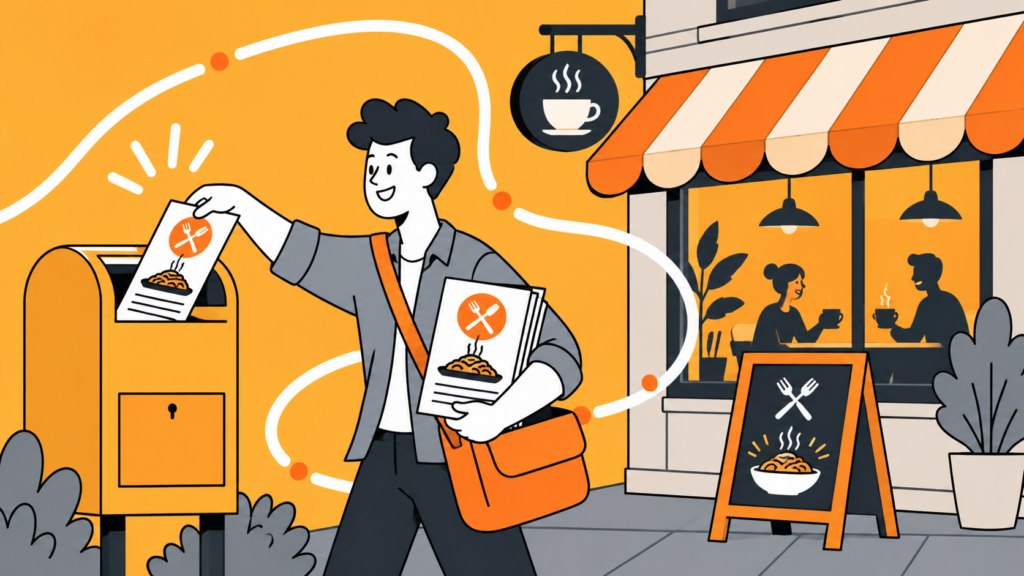


Sydney and Melbourne diners now spend roughly 70% of their monthly food and drink budget at venues in their own neighbourhood rather than in the CBD, according to Square’s 2024 “Neighbourhood Nation” research. That is not a shift hospitality businesses caused. It is a shift they can take advantage of, if their marketing actually reaches the streets around them. A cafe or restaurant lives and dies by its local reputation. You can have the best eggs Benedict in the suburb, but if the people living three streets away do not know you exist, you are leaving money on the table. For food businesses that depend on a tight catchment area, letterbox marketing remains one of the most direct and cost-effective ways to put your name, your menu, and your offer into the hands of the people most likely to walk through your door or place an order. This guide breaks down why it works, what to promote, and how to run campaigns that actually drive covers and orders.
Why Local Marketing Matters for Cafes and Restaurants
Most hospitality businesses draw the vast majority of their trade from a surprisingly small radius. Think about your own habits. You probably have a mental shortlist of two or three lunch spots near your office and a handful of dinner options close to home. Your customers are no different. They are choosing based on proximity, familiarity, and convenience. Reaching them where they live, through their letterbox, puts your brand directly into their daily routine.
Price and quality matter, but convenience is often the deciding factor, especially for midweek meals, quick lunches, and Friday night takeaway. A flyer with a clear menu and a simple way to order removes friction. It turns a vague “what should we have for dinner?” conversation into a specific decision.
Why Letterbox Marketing Works So Well for Food Businesses
There is a reason pizza chains have been dropping menus through letterboxes for decades. It works, because food is visual, local, and often decided on impulse.
Unlike a social media post that competes with hundreds of others in a feed, a physical flyer arrives in a relatively uncluttered environment. A well-designed cafe flyer with appetising photography and a clear offer gets picked up, read, and often kept. A Facebook post exists for seconds before someone scrolls past it. A flyer pinned to the corkboard by the back door can sit there for weeks, which means the cost per impression drops the longer it stays up. For a restaurant promoting a new seasonal menu or a cafe launching a loyalty programme, that repeated, passive exposure builds familiarity without requiring ongoing ad spend.
The Problem With Relying Only on Social Media
Social media is useful, but treating it as your only marketing channel is risky for a local food business. The maths often does not add up the way people assume.
Organic reach on Instagram and Facebook has been declining for years. A typical business page post now reaches somewhere in the low single digits of its follower count, often less on Facebook than on Instagram. If you have 2,000 followers, that could be as few as 25 to 100 people seeing a given post, and there is no guarantee any of them are in your delivery zone. Paid social ads can be geo-targeted, but you are competing in an auction-based system where costs fluctuate and results are unpredictable. A letterbox campaign, by contrast, guarantees physical delivery to every household in your chosen area.
Social platforms are also designed to keep people scrolling, not to connect them with their nearest Thai restaurant. The algorithm prioritises engagement, not purchase intent. Someone might like your reel of a sizzling stir-fry, but if they live 20 kilometres away, that engagement is worthless to your bottom line. Letterbox flyer distribution solves this by design: every piece goes to an address within your target zone, reaching people who can actually visit or order.
What Cafes and Restaurants Can Promote
One of the strengths of letterbox marketing is its versatility. You are not limited to a single message or format.
The obvious starting point is your menu. A clean, well-photographed menu card is one of the most effective flyers a restaurant can distribute. Beyond that, consider promoting specific offers: a $15 weekday lunch special, a family meal deal for four, a free coffee with any breakfast order, or a grand opening promotion. The key is to give people a reason to act now rather than later. Time-limited offers create urgency without feeling pushy.
Takeaway menu distribution is particularly effective because the flyer itself becomes a reference tool. People keep menus they might want to order from again. If you offer catering for offices or events, a separate flyer targeting commercial areas can open an entirely new revenue stream. Include your online ordering link, ideally as a QR code, so the path from “that looks good” to “order placed” is as short as possible.
Use QR Codes to Turn Flyers Into Orders
A printed flyer does not have to be a dead end. QR codes bridge the gap between physical marketing and digital action, and they have become second nature for most Australians since the pandemic normalised their use.
Place a QR code prominently on your flyer that links to your online menu, your booking page, or your preferred delivery platform. This turns a passive piece of print into an active sales tool. A family looking at your flyer on a Saturday evening can scan the code and have food ordered within two minutes. For cafes, linking to a booking system for brunch reservations can help manage weekend rushes while capturing customer data for future marketing.
QR codes also give you measurable data, something often cited as a weakness of offline marketing. Use a unique QR code or tracking URL for each campaign drop, and you can see exactly how many people scanned, which pages they visited, and whether they converted. Pair this with a unique promotional code, something like “FLYER10” for 10% off, and you can attribute orders directly to your letterbox campaign. That kind of measurement turns restaurant letterbox marketing from a hope-it-works exercise into a trackable, refinable channel.
Target the Right Streets, Suburbs and Households
Blanket distribution has its place, but smart targeting gets better results for the same budget.
Start with your existing customer data. If your POS system captures postcodes, you already know where your customers come from. Focus your distribution on those suburbs first, then expand into adjacent areas where you are underrepresented. For delivery-focused businesses, your distribution map should mirror your delivery zone exactly. There is no point dropping menus in suburbs you cannot deliver to.
Consider demographics too. A family-friendly restaurant might prioritise suburbs with higher concentrations of households with children. A specialty coffee roaster might target inner-city apartment blocks where professionals are willing to pay a premium for a good flat white. The Australian Bureau of Statistics provides free demographic data by suburb that can inform these decisions.
For dine-in trade, a one to two kilometre radius around your venue is the sweet spot. For takeaway and delivery, extend to whatever your delivery boundary allows. Some businesses run different creative for different zones: a “just around the corner” message for nearby streets and a “we deliver to your door” message for the outer ring. This kind of segmentation does not cost much extra but can meaningfully improve response rates.
Timing Your Campaign Around Customer Behaviour
When your flyer lands matters almost as much as what it says.
Think about when people make food decisions. A flyer arriving on a Wednesday or Thursday is well timed for weekend dining. One landing on a Monday morning catches people planning their work-week lunches. Seasonal timing matters too: promote your catering menu in November before the Christmas party rush, push family meal deals during school holidays, and highlight warm comfort food as winter sets in.
For cafes, a back-to-school campaign in late January targeting nearby families can drive consistent morning trade for months. Restaurants launching a new seasonal menu should time their drop to coincide with the menu change, giving people a reason to visit that week.
A single letterbox drop can generate results, but the real value comes from repetition. A programme of three to four drops over a quarter builds recognition and trust. The first flyer introduces you. The second reminds them. The third arrives just as they are deciding what to have for dinner.
What Makes a Good Restaurant Flyer
Your flyer has a few seconds to earn someone’s attention, so design matters.
Invest in professional food photography. A single hero image of your best dish, shot well, is worth more than a dozen mediocre phone photos. Keep text minimal and the hierarchy clear: your venue name, the offer, and how to act, whether that is calling, scanning, or visiting. Use a colour palette that reflects your brand. A clean, appetising flyer signals a clean, appetising restaurant. Cheap-looking print suggests a cheap experience.
The best-performing flyers tend to follow a simple formula:
- One strong image that makes people hungry
- One clear offer or reason to visit
- One obvious call to action: QR code, phone number, or address
- Opening hours and location
The temptation is to cram your entire menu onto a single A5 flyer. Resist it. A cluttered flyer with tiny text and no visual hierarchy gets binned. If you want to include a full menu, use a larger format, an A4 folded piece or a DL card with a QR link to the full menu online. Never include more than one primary call to action. If you want people to scan a QR code, make that the dominant action rather than also asking them to call, email, visit your website, and follow you on three social platforms.
How GDR Helps Cafes and Restaurants Reach Local Customers
Running an effective letterbox campaign involves more than printing flyers and hoping for the best. The logistics of targeting, distribution, and tracking require infrastructure and local knowledge.
GDR Media Group works with cafes and restaurants to identify the right suburbs, select distribution zones based on demographic and geographic data, and schedule drops for maximum impact. With sorting facilities and distribution networks covering metropolitan and regional areas, GDR handles the operational side so you can focus on what you do best: cooking and serving great food.
Campaign tracking is built into the process. Through unique QR codes, tracking URLs, and post-campaign reporting, you get clear visibility on how your drop performed. That data feeds into future campaigns, letting you refine your targeting and creative with each round. Whether you are a single-site cafe launching in a new suburb or a multi-location restaurant group running a national takeaway menu distribution programme, GDR’s infrastructure supports campaigns at every scale.
If you are serious about growing your local customer base, a conversation with GDR Media Group is a good starting point. Their team can walk you through targeting options, recommend formats, and build a distribution plan tailored to your venue and budget.

